
Making Buildings Better, One Breath at a Time

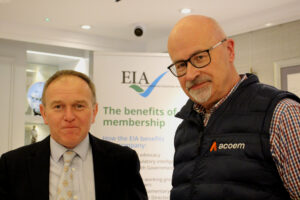
EIA talks to Nathan Wood, MD to Farmwood about its work, and what its like to be Deputy Chair of the EIA Air Quality Working Group.

When people ask what Farmwood does, the easy answer is ventilation, air quality and mechanical and electrical services. But that’s just the surface. What we actually do is make buildings safer, healthier, and compliant for the people who live, work, and learn inside them.

Since 2002, we’ve worked across every sector and every kind of place, from a shed to The Shard. Domestic, commercial, or industrial, if it moves air or manages energy, we’ve been there. Our work spans everything from home ventilation systems to large scale HVAC plant and full M and E infrastructure.

We refurbish air handling units (AHUs), flat pack and rebuild them on site, keeping manufacturer warranties intact and giving systems a second life. We integrate smart technology and IoT controls to bring older plant into the modern age, improving performance, monitoring energy, and keeping systems running at their best.

When things go wrong, we problem solve. When systems fall behind, we upgrade. And when clients want long term assurance, our service and maintenance contracts make sure performance, safety and compliance never slip.

We’re proud to be service partners to almost all of the major UK ventilation and HVAC manufacturers. That trust has been built through years of competence, reliability, and delivering quality workmanship that protects their reputation as much as our own.

We invest heavily in our teams and technology, from digital reporting and commissioning tools to advanced diagnostic equipment that helps us find and fix the root cause, not just the symptoms.

And the team itself, they’re the heart of Farmwood. Every single person here understands our mission, to be the best of the best and to own it 100 percent every single day. They bring not just skill, but the right morals, the integrity, pride and commitment that make us who we are. Our competence isn’t claimed, it’s evidenced through SKEB, Skills, Knowledge, Experience, and Behaviour, the foundation that keeps us compliant, capable, and consistent in everything we deliver.

Over the years, that commitment to doing things properly has earned us multiple national awards. From winning BESA’s National Contractor of the Year to receiving recognition for Health and Safety excellence and compliance leadership, we’ve consistently set the benchmark for professional standards. Our work in indoor air quality has also been recognised with several industry awards, celebrating both our innovative initiatives and the products we’ve helped bring to life.

We’re also active beyond the job site. We support initiatives such as GO AQS (Global Open Air Quality Standards) and the UK Centre for Mould Safety, because cleaner, safer air starts with awareness, education, and action.

We’re members of Future Homes groups, involved in regulation reform, and lobbying for stronger skills pathways and apprenticeships to secure the next generation of engineers. Competence must be built, not assumed, and we’re helping shape how that’s done.

Farmwood is part of several leading associations across the built environment, more recently joining the Environmental Industries Association (EIA). These collaborations keep us at the table when it matters most, influencing standards, improving guidance, and ensuring real world experience feeds into national policy. 

We also work closely with All Party Parliamentary Groups (APPGs) and give our time freely through advocacy and expert support to many brilliant people and charities who share our mission to make homes healthier, safer, and fit for future generations. This is the part of the work that matters most. Not because it wins contracts, but because it changes lives.

Alongside this, we proudly lead World Ventil8 Day (WV8D), which has grown into a global movement promoting the importance of good ventilation for health and wellbeing. What started as an idea led by a small UK SME now reaches across continents, with support from universities, professional bodies, and experts around the world. For a company of our size, being recognised globally for leadership in indoor air quality and awareness shows just how far purpose and passion can reach.

That commitment to wider impact is also why I took on the role of Deputy Chairman of the EIA’s Indoor Air Quality Working Group. It’s not a title, it’s a responsibility. The EIA brings together people who understand that clean air is not a luxury, it’s essential to public health, safety, and sustainability. My aim is to make sure practical, competent voices like ours are heard. To push for joined up thinking between government, regulators, and industry. And to show that SMEs can lead when it comes to integrity and innovation.

We’re always open to collaboration with policymakers, health professionals, and other industry leaders because improving indoor air quality isn’t just about buildings, it’s about people. Every improvement we make to a home, school or hospital reduces preventable illness, supports wellbeing, and ultimately helps ease the strain on the NHS. The societal impact of healthy buildings is real, and it’s time that became part of the national conversation.

We can’t reach net zero or improve health outcomes without tackling the air inside our walls. It’s that simple. And at Farmwood, we’re proving that competence, compliance, and care can coexist, and that when they do, everyone breathes easier.

“Because good ventilation isn’t just good engineering. It’s good humanity”

For more information visit: Home – Farmwood – Ventilation Systems Servicing and Support

Brownfield Boom or Bust? Why Government Inaction Risks 1.4 Million Homes

Did you see the launch of last months, CPRE “State of Brownfield 2025” report which delivers a powerful message: England has a minimum capacity for 1.41 million homes on brownfield sites, with at least 770,000 already benefiting from planning permission—enough to deliver more than half a million homes swiftly, without encroaching on greenfield or Green Belt land.

The #EIA applauds CPRE The countryside charity for spotlighting this record-breaking potential. Their work underscores that brownfield land is a “constantly renewing resource”, with potential to support the delivery of homes, regeneration, and sustainable development across all regions.

Yet, despite this opportunity, only 55% of identified brownfield housing potential have active permissions, revealing persistent obstacles in land remediation, planning delays, and viability for development.

EIA is challenging why is brownfield is not being delivered?

🏠 Planning bottlenecks remain a barrier: hundreds of thousands of homes are sitting with council permission, but are not proceeding to build-out.

Sites face complex remediation costs, impacting viability and delaying progress. This is not helped with the risk of LRR being at risk of being removed at the upcoming Chancellors budget in November.

🏠 Outdated brownfield registers persist—nearly 40% of Local Planning Authorities haven’t updated theirs in the past two years—obscuring both supply and momentum. This has been a constant frustration for EIA, where many brownfield sites do not even make the Brownfield register.

🏠 EIA calls on the Government to go further on Brownfield development to help its growth agenda.

🌍 Enshrine Brownfield-First in National Planning Policy: The NPPF must be amended to mandate that ALL brownfield sites receive primacy over greenfield allocations.

🌍 Plan-Making Powers: Grant local authorities stronger tools to sequence development, bring forward brownfield sites, and pause speculative greenfield projects.

🌍 Targeted Funding and Support: Redirect New Towns and Homes England programmes to underwrite remediation costs, viability gaps, and ensure delivery of genuinely affordable homes on brownfield land.

🌍 Transparent, Centralised Data: Implement a national brownfield register health check and integrate it into a unified Planning Data Hub to ensure open and reliable data.

Michael Lunn, CEO, Environmental Industries Association, comments:

“The potential of brownfield land is obvious—but its delivery is stalling under planning frictions, remediation costs, and fragmented data. The Government must intervene to catalyse this latent resource. We need a ‘brownfield‑first’ approach backed by targeted funding for clean-up and a central data infrastructure to track progress. Only then will brownfield become the backbone of sustainable housing delivery.”

A Challenge to Government

The EIA congratulate CPRE for their thorough analysis and advocacy. Now, we urge the Government to transform this untapped potential into action. By prioritising remediation support, regulatory clarity, and updated data, Ministers can unlock brownfield’s capacity to deliver high-quality homes, revive communities, and safeguard our green spaces.

Environmental Industries Association and its Members stands ready to support policymakers and industry in delivering a brownfield revolution.

For more information on the work of the Environmental Industries Association drop a line to our Membership team Membership@EIAssociation.co.uk

Remediation of Land and Groundwater – Environmental Industries Association

#CPRE #BrownfieldFirst #Remediation #ContaminatedLand #Land

Photo Credit: Soilfix 

Environmental Industries Association Calls for Safe and Compliant Decommissioning of Liquid Fuel Storage Tanks Amid Net Zero Transition

London, 21 October 2025. The Environmental Industries Association (EIA) is calling for urgent attention to safe and compliant decommissioning of liquid fuel storage tanks as the UK accelerates its transition to low-carbon heating. With the Government banning the sale of fossil-fuelled boilers from 2026, an estimated three million domestic oil tanks and hundreds of thousands of commercial tanks will need to be decommissioned over the next decade.

Industry forecasts suggest that up to 300,000 domestic tanks per year could require removal between 2026 and 2035, alongside thousands of large-scale commercial installations. This represents one of the most significant infrastructure changes in the heating sector in modern times.

Compliance and Safety Are Critical
Under the Control of Pollution (Oil Storage) (England) Regulations 2001, the Environmental Protection Act 1990, and related legislation, improper tank removal can lead to severe environmental contamination and legal penalties. Domestic tanks—typically 1,000 to 5,000 litres and often made from polyethylene—require different handling compared to commercial tanks, which can hold several million litres and involve complex pipework and bunded steel construction.

Key Requirements Include:

  • Risk Assessment and Method Statement (RAMS) before work begins.
  • Removal of residual fuel by a licensed waste carrier with an ADR-certified driver.
  • Issuance of Gas-Free Certificates after degassing tanks to below 10% of the Lower Explosive Limit (LEL).
  • Proper disposal of contaminated polyethylene tanks at licensed hazardous waste facilities.
  • Full documentation, including Duty of Care Waste Transfer Notes, Hot Work Permits, and Completion Certificates.

Bruce Woodal, Founding Member of the Fuel Experts Association, said:
“The scale of tank decommissioning over the next decade is unprecedented. Every uplift, every cut, every disposal must be done by the book. This isn’t just about compliance—it’s about protecting our environment and ensuring the safety of those carrying out the work. Cutting corners is not an option.”

Michael Lunn, CEO of the Environmental Industries Association, added:
“As the UK accelerates towards Net Zero, the environmental sector has a critical role in managing the legacy of fossil fuel infrastructure. The EIA is committed to supporting best practice, providing guidance, and working with regulators to ensure that tank decommissioning is carried out safely, legally, and sustainably.”

For more information on technical guidance, including OFTEC TI/133 and TI/134, and the full list of applicable legislation see below.

Documentation and Record Keeping

The following documentation should be maintained for each decommissioning project:

  • Risk Assessment and Method Statement (RAMS)
    • Permit to Work (including Hot Work and Confined Space permits)
    • Gas-Free Certificates (valid for 24 hours)
    • Duty of Care Waste Transfer Notes / Hazardous Waste Consignment Notes
    • ADR Driver and Vehicle Certification
    • Insurance and Lifting Plan (where applicable)
    • Site Clearance / Completion Certificate

Applicable Legislation and Standards

  • Control of Pollution (Oil Storage) (England) Regulations 2001
    • Environmental Protection Act 1990
    • Health and Safety at Work Act 1974
    • Dangerous Substances and Explosive Atmospheres Regulations (DSEAR) 2002
    • Confined Spaces Regulations 1997
    • BS EN 60079-10-1: Explosive Atmospheres
    • OFTEC Technical Information TI/133 – Decommissioning of Oil Storage Tanks
    • OFTEC Technical Information TI/134 – Removal of Domestic Oil Storage Tanks
    • BS 7121 – Code of Practice for Safe Use of Cranes

Party Conference Season 2025: What It Means for the Environmental Sector

As the dust settles on the 2025 Party Conference season, the Environmental Industries Association (EIA) has closely monitored the major announcements, debates, and policy shifts across the four leading political parties—Labour, Conservatives, Liberal Democrats, and Reform UK. With a general election still 4 years away, this year’s conferences offered a revealing glimpse into the environmental priorities shaping the UK’s political landscape.

“Party conference season is always useful to ascertain trends and political thinking and where policy intervention is needed over the coming 12 months,” said Michael Lunn, CEO of EIA. “It’s a vital moment for our sector to understand how each party is positioning itself on the environment, infrastructure, and economic growth.”

Labour: National Renewal Through Green Growth

Labour’s conference in Liverpool was framed around “national renewal,” with Prime Minister Keir Starmer invoking the legacy of post-war reconstruction. The party’s environmental and economic agenda focused on:

  • Clean Energy by 2030: A bold commitment to 100% clean energy, reaffirmed by Chancellor Rachel Reeves, alongside support for nuclear projects like Sizewell C.
  • Nature Recovery & Water Reform: DEFRA Secretary Emma Reynolds announced criminal penalties for polluting water companies and banned executive bonuses linked to pollution.
  • Housing & Planning: A £39bn New Towns programme aims to deliver 1.5 million homes, with planning reform to accelerate approvals.
  • PFAS & Air Quality: Fringe events spotlighted chemical pollution and air quality, with calls for urgent regulatory reform and stronger public health protections.
  • Green Prosperity: Labour scaled back its original £28bn/year green investment pledge to £24bn over the Parliament, sparking debate over public vs private financing.

Labour’s approach blends industrial strategy with environmental ambition, though critics—including Greenpeace and WWF—warned of gaps in nature protection.

Conservatives: Climate Reset and Economic Pragmatism

The Conservative Party, under Kemi Badenoch’s leadership, took a dramatic turn by pledging to repeal the Climate Change Act 2008, effectively dismantling the UK’s legal commitment to net zero by 2050. Key themes included:

  • Net Zero Scepticism: Badenoch framed net zero as economically damaging, proposing a “proper strategy” focused on affordability and reliability.
  • Fossil Fuel Expansion: Plans to increase North Sea oil and gas extraction and end EV mandates and heat pump subsidies.
  • Green Gas & Infrastructure: Fringe panels explored green gas and clean energy infrastructure as alternatives to traditional fossil fuels.
  • Apprenticeships Over University: Doubling the apprenticeship budget and cutting low-return university courses to align skills with employment.
  • Nature Restoration: Despite the climate rollback, some voices within the party—like Michael Gove—advocated using Brexit to restore British nature.

The Conservatives’ pivot away from net zero has drawn sharp criticism from environmental groups and former party leaders, raising concerns about investment certainty and international credibility.

Liberal Democrats: A Roadmap for Sustainability

At their Bournemouth conference, the Liberal Democrats unveiled Policy Paper 160: “For People, For Planet”, outlining a comprehensive environmental strategy:

  • Climate, Nature & Resilience Roadmap: A cross-departmental plan with a new Chief Secretary for Sustainability in the Treasury.
  • Energy Decarbonisation: Targeting 95% clean power by 2030, with support for modular nuclear reactors and community energy.
  • Just Transition: Empowering local councils and supporting North Sea communities in the shift away from fossil fuels.
  • Green Jobs & Skills: Expansion of green apprenticeships and a zero-carbon skills strategy.
  • Adaptation & Agriculture: Investment in flood resilience and a £1bn/year boost to ELMS.

While the Lib Dems lacked detailed positions on brownfield development and air quality, their holistic approach to climate and nature policy was well-received by stakeholders.

Reform UK: Anti-Net Zero and Brownfield Focus

Reform UK’s Birmingham conference reinforced its anti-Net Zero stance, positioning climate action as economically harmful. Key proposals included:

  • Scrapping Net Zero: Repealing the 2050 target and cutting all related subsidies.
  • Fossil Fuel Expansion: Fast-tracking oil, gas, fracking, and clean coal projects.
  • Brownfield Development: Tax incentives and “loose-fit planning” to accelerate housing on previously developed land.
  • Modular Construction: Emphasis on innovation to reduce waste and improve building efficiency.

Reform UK’s environmental platform has been widely criticised, with independent analysis warning of job losses, GDP decline, and higher energy bills if renewables are abandoned.

Conclusion: Diverging Paths Ahead

The 2025 Party Conference season revealed stark contrasts in environmental policy across the political spectrum. Labour and the Liberal Democrats are doubling down on green growth and resilience, while the Conservatives and Reform UK are rethinking—or outright rejecting—net zero commitments.

For EIA members, these developments underscore the importance of continued engagement with policymakers, especially ahead of the Autumn Budget and the next general election. The environmental sector must remain vigilant, proactive, and united in advocating for sustainable, science-based policy that supports both the planet and the economy.

ALL EIA MEMBERS HAVE A MORE COMPREHENSIVE BRIEFING SENT TO THEM COVERING ALL MAJOR POLICY ANNOUNCEMENTS. 

EIA responds to Spending Review

EIA Raises Concerns Over DEFRA Cuts and Potential Delays to Environmental Permitting

London, 12 June 2025 — The Environment Industries Association (EIA) today voiced serious concerns over the implications of recent funding decisions for the Department for Environment, Food and Rural Affairs (DEFRA), warning that budget cuts could lead to further delays in environmental permitting and licensing processes managed by the Environment Agency.

Following the Chancellor’s Spending Review announcement yesterday, the EIA policy team have been closely analysing the details behind the headline figures. While the review outlines long-term investments in infrastructure—including rail, nuclear, carbon capture, NHS, and housing—these projects are unlikely to deliver immediate economic growth. This concern is underscored by today’s Office for National Statistics (ONS) report showing a 0.3% contraction in the UK’s economy.

Michael Lunn, CEO to the Environmental Industries Association stated “While we welcome the government’s commitment to long-term infrastructure, the lack of short-term support for business and specifically the Environmental Services and Technology Sector and continued constraints on specialist environmental consultancy spending are troubling”.

“The Chancellor is clearly banking on future growth, but the timeline for returns is uncertain—and the risk of further tax measures in the Autumn Budget remain high”.

Buried within the 128-page Spending Review document, the EIA has identified specific concerns regarding DEFRA’s financial settlement. Although DEFRA is set to receive £7.4 billion in total funding by 2028–29, and £16 billion in capital funding over the review period (representing an average real-terms growth rate of 2.5% per year), this comes with a mandate to deliver at least 5% in savings and efficiencies during Phase 2 of the review.

These savings include £144 million in technical efficiencies identified through the Zero-Based Review (ZBR), and a shift toward increasing in-house digital capabilities to reduce reliance on external contractors. While digital transformation is welcome, the EIA warns that such measures must not come at the expense of timely and effective environmental regulation.

To meet these financial targets, DEFRA will explore a range of cost-saving measures, including the integration of advanced artificial intelligence (AI) technologies. With rapid advancements in AI capabilities, the department is assessing which operational workloads—such as data entry, support services, analytical functions, and communication roles—could be enhanced or replaced by automation.

AI systems offer significant potential to improve efficiency through faster data processing, streamlined communication, and reduced administrative overheads. Technologies such as AI-native languages, including Gibber Link, enable machines to exchange and interpret data at unprecedented speeds, offering a transformative opportunity for internal operations.

While AI cannot replace all human-led tasks—particularly those requiring in-person research and fieldwork—it can support the department by accelerating data interpretation and publication, ultimately reducing wage costs and enhancing service delivery.

In parallel, DEFRA is reviewing its permitting and licensing frameworks. Many current processes are seen as overly complex and time-consuming. By redesigning these systems, the department aims to reduce administrative burdens, improve user accessibility, and lower operational costs.

However, DEFRA acknowledges the potential risks associated with regulatory relaxation. Looser controls could lead to increased environmental degradation, including higher emissions, waste, and habitat destruction. The department remains committed to balancing efficiency with its core mission: protecting green spaces, promoting soil health, supporting agricultural productivity, and conserving wildlife.

Peter Atchison, Chair of the Remediation of Land Working Group stated that “Delays in permitting and licensing not only hinder environmental protection but also stall investment and innovation in the green economy. We urge the government to ensure that cost-cutting within DEFRA does not compromise the Environment Agency’s ability to deliver on its critical responsibilities.”

The EIA will continue to monitor developments and engage with DEFRA and other stakeholders to advocate for a balanced approach that supports both fiscal responsibility and environmental stewardship.

Flood Defence Funding

  • The government has committed £4.2 billion in Total Departmental Expenditure Limit (TDEL) over the period 2026–27 to 2028–29 specifically for flood defence infrastructure.
  • This represents a 5% annual increase in the flood defence budget, aimed at protecting communities across England from increasing flood risks due to climate change and extreme weather events.

Nature-Based Solutions and Reservoirs

  • While there is no direct mention of new reservoir construction in the Spending Review, the funding strategy includes nature-based solutions that may indirectly support water storage and flood mitigation.
  • DEFRA’s broader capital funding of £16 billion over the review period includes investments in sustainable farming, nature recovery, and environmental resilience, which are often linked to catchment-based flood management and wetland restoration.

DEFRA Operational Budget

  • Despite capital investment increases, DEFRA’s day-to-day spending will decrease in real terms—from £4.8 billion in 2025–26 to £4.7 billion by 2028–29, a 2.7% annual reduction.
  • This may place pressure on staffing and operational delivery, even as capital projects expand.

But there were some winners:

The government will invest in the critical national infrastructure needed to connect this country‘s cities and towns. The settlement will provide £10.2 billion for rail enhancements (excluding HS2) over Phase 2, including:

  • £3.5 billion to drive delivery of the TransPennine Route Upgrade, improving connectivity and reducing journey times between Manchester and Leeds, from 55 to 41 minutes. This will be delivered by the early 2030s;
  • Continued delivery of East-West Rail with £2.5 billion investment to provide new connectivity and unlocking growth across the Oxford-Cambridge corridor;
  • £300 million for rail investment in Wales, including for the Burns Review stations, North Wales Level Crossing, Padeswood Sidings and Cardiff West Junction. This SR and the upcoming 10-year Infrastructure Strategy will recognise Wales’ long-term infrastructure needs and will deliver at least £445 million of rail enhancements to realise them;
  • Funding to progress the next stage of Midlands Rail Hub West, strengthening connections from Birmingham across the West Midlands and to other regions.
  • £25.3 billion is provided under this settlement to progress delivery of HS2 from Birmingham Curzon Street to London Euston. This funding will support the full reset of the HS2 programme under the leadership of the new Chief Executive, addressing longstanding delivery challenges.

Angela Rayner’s department emerged as one of the biggest beneficiaries of the Spending Review, despite a challenging fiscal environment:

  • Capital Investment:
    The department secured £39 billion in grants over the next 10 years to support new housing developments. This funding will be distributed among local authorities, private developers, and housing associations to accelerate housebuilding and regeneration efforts. However, with the current skills shortages the delivery of spades in the ground will be challenged in the short term.
  • Day-to-Day Spending:
    Despite the capital boost, the department faces average annual cuts of 1.4% in its day-to-day operational budget from 2025–26 to 2028–29. The total settlement for this period is £16.7 billion
  • Policy Focus:
    The funding is intended to support Rayner’s ambitions to revitalise local communities, expand affordable housing, and devolve more powers to local governments. However, the operational cuts may challenge the delivery of frontline services unless offset by efficiency gains. This may lead to Councils turning to the need to uplift their local Council precepts to balance Council budgets.

Local Government and Devolution

  • The Spending Review includes a renewed focus on regional rebalancing, with significant infrastructure investments directed toward Northern and the Midlands regions.
  • Local transport projects, such as tram expansions in Manchester and Birmingham and upgrades to the Tyne and Wear Metro, are part of a broader strategy to stimulate regional growth

Sunil Shah, Chair of the EIA Sustainable Buildings Working Group said

“We welcome the Government’s £13.2 billion commitment to home decarbonisation through the fully funded Warm Homes Plan”

This initiative represents a vital step forward in delivering warmer, more energy-efficient homes, reducing household bills, and addressing the climate crisis. Last week’s announcement that all new homes in England will be equipped with renewable energy as standard was a significant milestone. Yesterday’s announcement builds on that momentum, offering much-needed certainty for both industry and consumers.

By supporting the rollout of low-carbon technologies, including retrofitting, the Warm Homes Plan will help accelerate the UK’s transition to a cleaner, more sustainable future. We look forward to reviewing the full details of the plan in due course.”

Jim Mills, Chair of the EIA Air Quality Working Group expressed disappointment that Air Quality did not feature significantly with only one mention, however, that was in the context of agricultural impacts presumably linked to methane emissions.

For more information please contact:

Environment Industries Association (EIA)
Membership@EIAssociation.co.uk
www.EIAssociation.co.uk

Environmental Industries Association | LinkedIn

EIA Launches *New* Working Group on Environmental Noise

London, UK – 5 June 2025 – The Environmental Industries Association (EIA), the leading voice for the UK’s environmental services technology and services sector, is proud to announce the formation of a new Environmental Noise Working Group. This initiative underscores the EIA’s commitment to addressing the growing challenges and opportunities surrounding environmental noise pollution across the UK.

The Environmental Noise Working Group will bring together experts from industry, academia, and government to explore innovative solutions, influence policy, and promote best practices in noise measurement, assessment, mitigation, and regulation. With urbanisation, infrastructure development, and transportation networks expanding rapidly, the need for coordinated action on environmental noise has never been more urgent.

Key objectives of the working group include:

  • Policy Engagement: Collaborating with regulators and policymakers to shape effective noise control legislation and standards.
  • Innovation and Technology: Promoting the adoption of cutting-edge noise management, assessment and abatement technologies.
  • Public Awareness: Raising awareness of the health and environmental impacts of noise pollution.
  • Industry Collaboration: Creating a platform for EIA members to share knowledge, case studies, and technical expertise.

Giles Parker, Sound Barrier Solutions who has offered to chair the working group said “We are excited to launch this new working group at a time when environmental noise is gaining recognition as a critical public health and environmental issue,” at the EIA. “This group will play a vital role in ensuring that the UK remains at the forefront of sustainable and responsible environmental management.”

The Environmental Noise Working Group will hold its inaugural meeting in next month, with participation open to all EIA members and invited guests and stakeholders.

For more information or to express interest in joining the group, please visit: https://eiassociation.co.uk/policy/environmental-noise/

Environmental Industries Association
Privacy Overview

This website uses cookies so that we can provide you with the best user experience possible. Cookie information is stored in your browser and performs functions such as recognising you when you return to our website and helping our team to understand which sections of the website you find most interesting and useful.