 Former Environment Secretary argues UK must fully seize regulatory independence to deliver practical, science‑led environmental reform
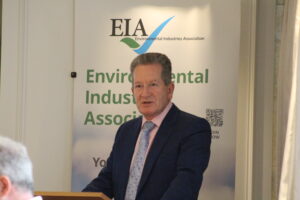
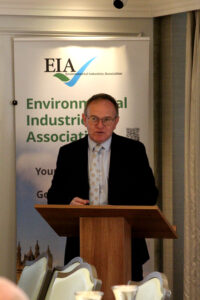
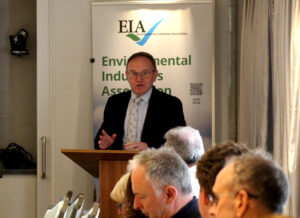
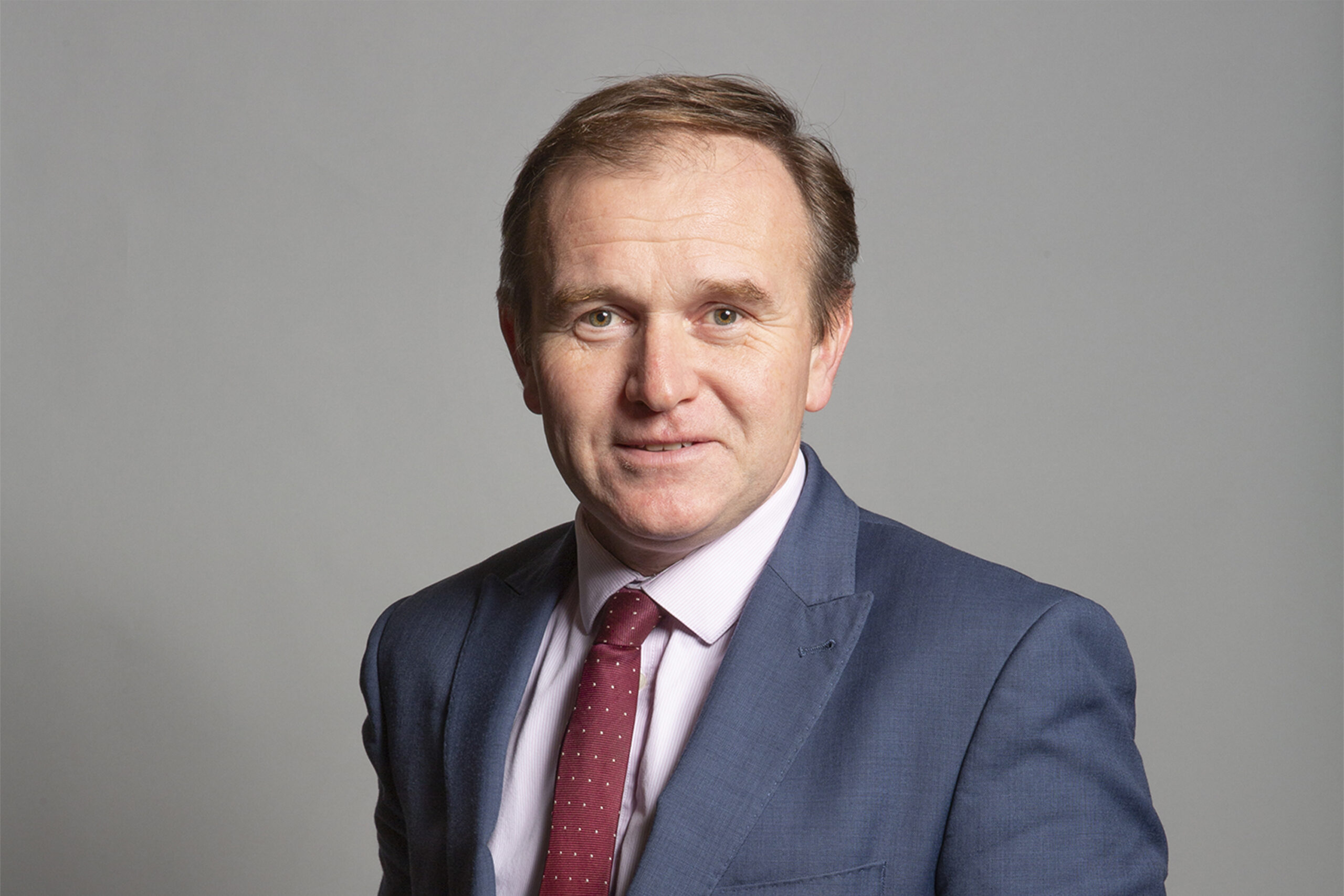
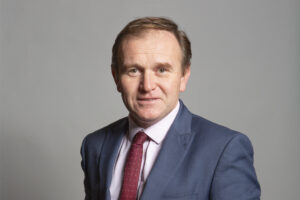
Former Secretary of State for Environment, Food and Rural Affairs Rt Hon George Eustice has delivered a robust call for regulatory reform, urging the UK to make fuller use of its post‑Brexit freedom to create environmental policy that is practical, evidence‑based and tailored to national needs.
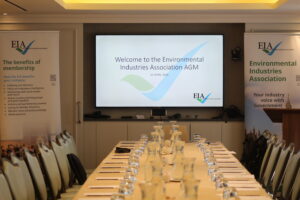
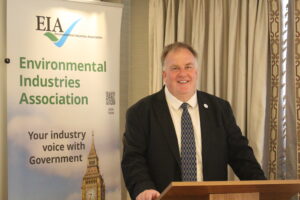
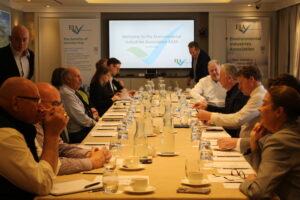
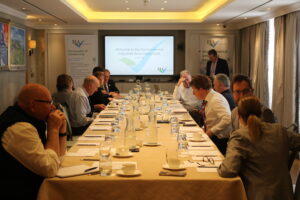
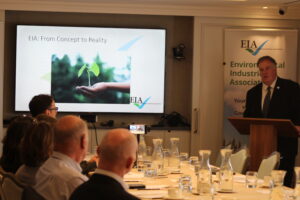
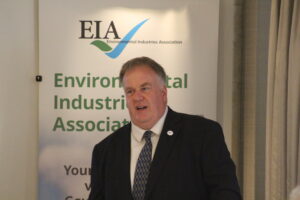
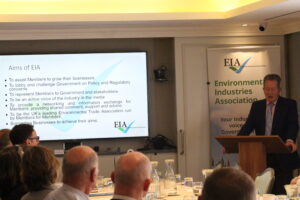
Speaking as keynote speaker at the Environmental Industries Association (EIA) Annual General Meeting, Eustice reflected on his time in office and set out a detailed critique of what he described as the shortcomings of EU‑derived environmental legislation—alongside an ambitious vision for how the UK could do better.
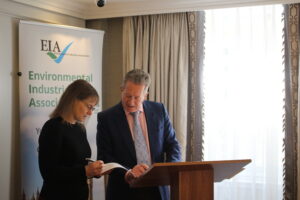
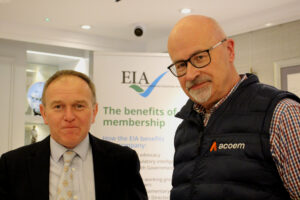
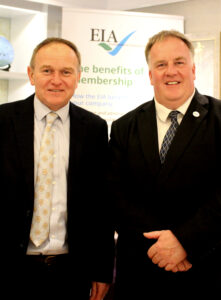
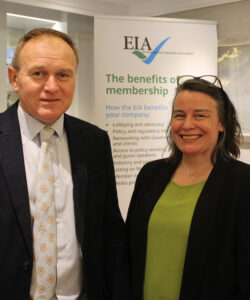
Opening his address, Eustice acknowledged his long‑standing professional relationship with EIA Chief Executive Michael Lunn and former Environment Minister Rebecca Pow, highlighting their shared experience working within Defra and shaping environmental policy from the inside. He described the meeting as an opportunity to speak candidly about what had worked—and what had not—during a period of significant change in UK environmental governance.
A critique of EU environmental law
Eustice argued that much EU environmental legislation had become overly complex, litigation‑heavy and focused on “stretch targets” that were politically attractive but practically unachievable. In his view, this approach often produced ambiguous laws and slowed innovation, as regulators and industry became locked into procedural compliance rather than environmental outcomes.
“The system was not always designed to encourage creative policy‑making,” he suggested, pointing to examples where inflexible directives limited the UK’s ability to respond to local environmental challenges with proportionate solutions.
The Environment Act and a new UK framework
Central to his speech was the UK’s post‑Brexit approach to environmental protection, primarily established through the Environment Act. Eustice described the Act as an attempt to create an agile, science‑led framework—one that would allow policy to evolve over time through evidence, iteration and practical experience.
Rather than relying on composite targets, particularly in areas such as water quality, he said the UK had deliberately moved toward long‑term, achievable goals that could be measured transparently and delivered incrementally. This, he argued, represented a fundamental break from the EU model.
He also addressed the establishment of the Office for Environmental Protection (OEP), designed as an independent watchdog to hold government to account. While supporting its core purpose, Eustice expressed concern that in its early stages the OEP had focused too heavily on legacy EU targets that he regarded as unrealistic and misaligned with the UK’s new framework.
Reforms on waste, air, habitats and chemicals
Eustice went on to outline a series of policy reforms initiated during his time at Defra, many of which he felt had been misunderstood or only partially implemented.
On the circular economy, he highlighted the introduction of powers for Extended Producer Responsibility and Deposit Return Schemes, aimed at boosting recycling rates, improving consistency in waste collections and shifting responsibility upstream toward producers.
Addressing air quality, Eustice defended the decision not to adopt the World Health Organization’s stricter PM2.5 targets, citing concerns over achievability, transboundary pollution and the political reality of measures that would require radical changes in domestic behaviour. He emphasised the role of electric vehicle adoption as a more realistic driver of long‑term improvement.
On habitat regulations, he described existing rules as duplicative and, at times, counterproductive—particularly when they blocked developments that could result in net environmental gains. His proposed solution was a consolidated, UK‑specific legal framework to replace overlapping regimes.
He also reflected on stalled plans to reform chemicals and pesticides regulation, including efforts to accelerate approval processes for biological pesticides and redesign the UK’s version of REACH. These initiatives, he noted, had largely been paused by subsequent administrations.
Regulatory capacity and water quality
Eustice was particularly critical of the erosion of expertise within environmental arms‑length bodies. He described a paused proposal to break up the Environment Agency, create a standalone Floods Agency and merge remaining regulatory functions with Natural England into a single environmental regulator. Loss of specialist capability, he argued, was now contributing to chronic delays in decision‑making.
On water quality, he stressed that government had committed £83 billion to reduce harm from storm overflows well before the issue became a dominant political flashpoint, framing it as an example of long‑term planning overtaken by public controversy.
Q&A: frustration and cautious optimism
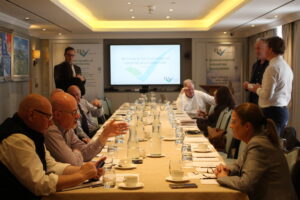
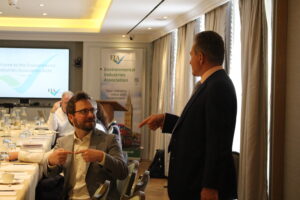
During the Q&A session, Eustice voiced frustration that the UK often continues to align with EU environmental demands rather than exercising its full regulatory independence. He also highlighted the persistent tension in building regulations between energy efficiency and health outcomes—particularly indoor air quality—which he felt remained under‑prioritised.
Despite his critiques, Eustice struck an optimistic tone on the future of Net Zero, predicting that progress would continue largely due to corporate leadership and energy security pressures, regardless of political rhetoric.
His address left delegates with a clear message: the opportunity for a more effective UK environmental framework exists—but only if policymakers are willing to fully embrace it.
For more information on the work of the EIA or to join our growing community email: Membership@EIAssociation.co.uk